by Gregg Obst on June 24, 2009
in Photos

Barnagat Lighthouse (A.K.A. “Old Barney”), Barnagat Lighthouse State Park, located on the northern tip of Long Beach Island in New Jersey. At 172 feet, it is the fourth tallest lighthouse in the United States.
I had Wednesday afternoon off from work so I decided to go find this sunflower farm in Harleysville, PA because I have an idea for a sunflower field shot that has been haunting me. I found the farm but the sunflowers are probably a month and a half from having flowers. So I decided to drive the 150 miles out to Long Beach Island in New Jersey and locate the Barnagat Lighthouse, another photo subject I’ve been meaning to capture. The weather was not looking promising but the rain held off until I got my shots of the lighthouse.
For information on the Barnagat Lighthouse, visit this Wikipedia article.
I shot this as seven bracketed RAW frames and then combined them into an HDR with Photomatix Pro and finally, tone mapped that image to create the final product.
Ways to bookmark and share this post:
by Gregg Obst on June 23, 2009
in Photos

I was out driving around randomly in the middle of nowhere after work today just looking for interesting things to photograph when I came upon this farm called “Skyline Stables” near Alburtis, PA. I couldn’t pass up the chance to photograph these beautiful horses in the magic hour light of the setting sun.
Apparently Skyline Stables is a full service Horse farm with horses for sale, a tack store, riding lessons and a Summer riding camp for kids ages 7-17. More information on their web site.
Ways to bookmark and share this post:
by Gregg Obst on June 21, 2009
in Photos

This is the old Mertztown Train Station located on Chestnut Street in Mertztown, PA. It was built in 1895 and served patrons of the former Reading Railroad. The station was closed by the Reading Railroad Company in 1964. The Mertztown station is now owned by Atlas Minerals and Chemicals, which is the industry located adjacent to the station and tracks. It is currently used for storage by Atlas. The “Mertztown” sign was built and painted by an Atlas employee who was also responsible for convincing Atlas to repaint the station into original colors.
As you can see, I shot this during one of the more overcast parts of Sunday which really brought out what I like to call the “HDR clouds”. I shot this as seven bracketed RAW frames and then combined them into an HDR with Photomatix Pro and finally, tone mapped that image to create the final product.
There’s a nice database of Pennsylvania Train Stations (existing and gone) available on this page.
Ways to bookmark and share this post:
by Gregg Obst on June 19, 2009
in Photos

I shot this sunset tonight from the bridge that runs over the dam at Lake Ontelaunee in Berks County, PA. Single Exposure, tripod mounted with Cokin Graduated Sunset-2, Neutral gray and Graduated Tobacco-Grey Pro-Z filters.
Lake Ontelaunee is a 1,082 acre reservoir that provides much of the drinking water for the city of Reading Pennsylvania. It’s a favorite fishing spot year round and is surrounded by state game lands and farms. The lake is formed behind the Ontelaunee Dam and was created in 1926.
For more information on Lake Ontelaunee, visit this page.
Ways to bookmark and share this post:
by Gregg Obst on June 17, 2009
in Photos

Going back through my archives, I picked this shot out from my 2-7-2009 trip to the National Cathedral in Washington D.C. This is a perspective from the left side of the church looking up and across to the right side.
For more information on the National Cathedral, visit their web site at www.nationalcathedral.org/
I shot this as seven bracketed RAW frames and then combined them into an HDR with Photomatix Pro and finally, tone mapped that image to create the final product.
Ways to bookmark and share this post:
by Gregg Obst on June 14, 2009
in Photos

When I woke up this morning and saw those big, white, puffy clouds filling the brilliant blue sky, I knew I had to see if they were reflecting off of Lake Ontelaunee which is just down the road from my home. Sure enough, they were reflecting nicely. I walked half way across the bridge that goes over the dam and setup the tripod and took a series of bracketed shots with the intention of HDR and tone mapping them when I got home.
Lake Ontelaunee is a 1,082 acre reservoir that provides much of the drinking water for the city of Reading Pennsylvania. It’s a favorite fishing spot year round and is surrounded by state game lands and farms. The lake is formed behind the Ontelaunee Dam and was created in 1926.
For more information on Lake Ontelaunee, visit this page.
I shot this as seven bracketed RAW frames and then combined them into an HDR with Photomatix Pro and finally, tone mapped that image to create the final product.
Ways to bookmark and share this post:
by Gregg Obst on June 14, 2009
in Photos

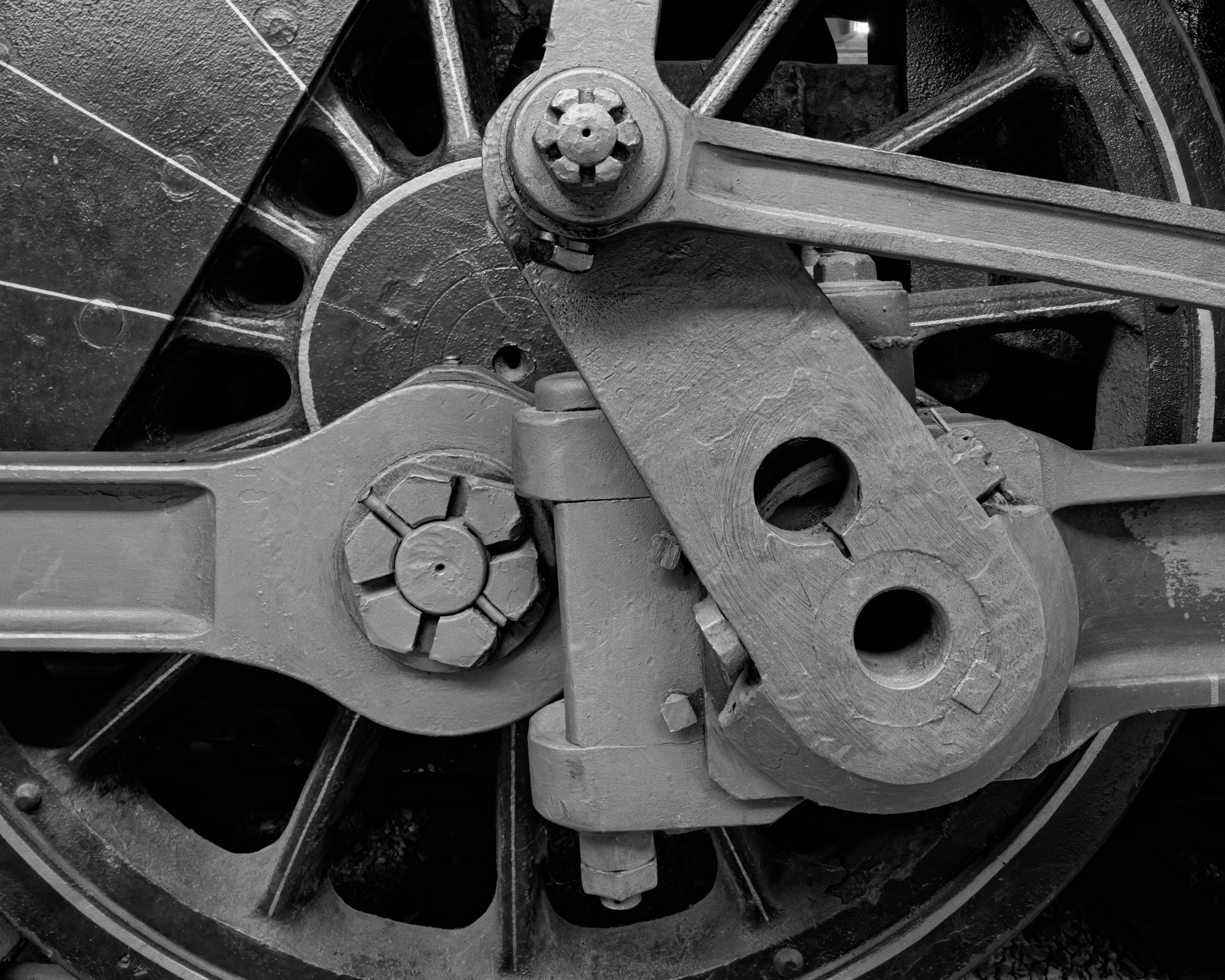
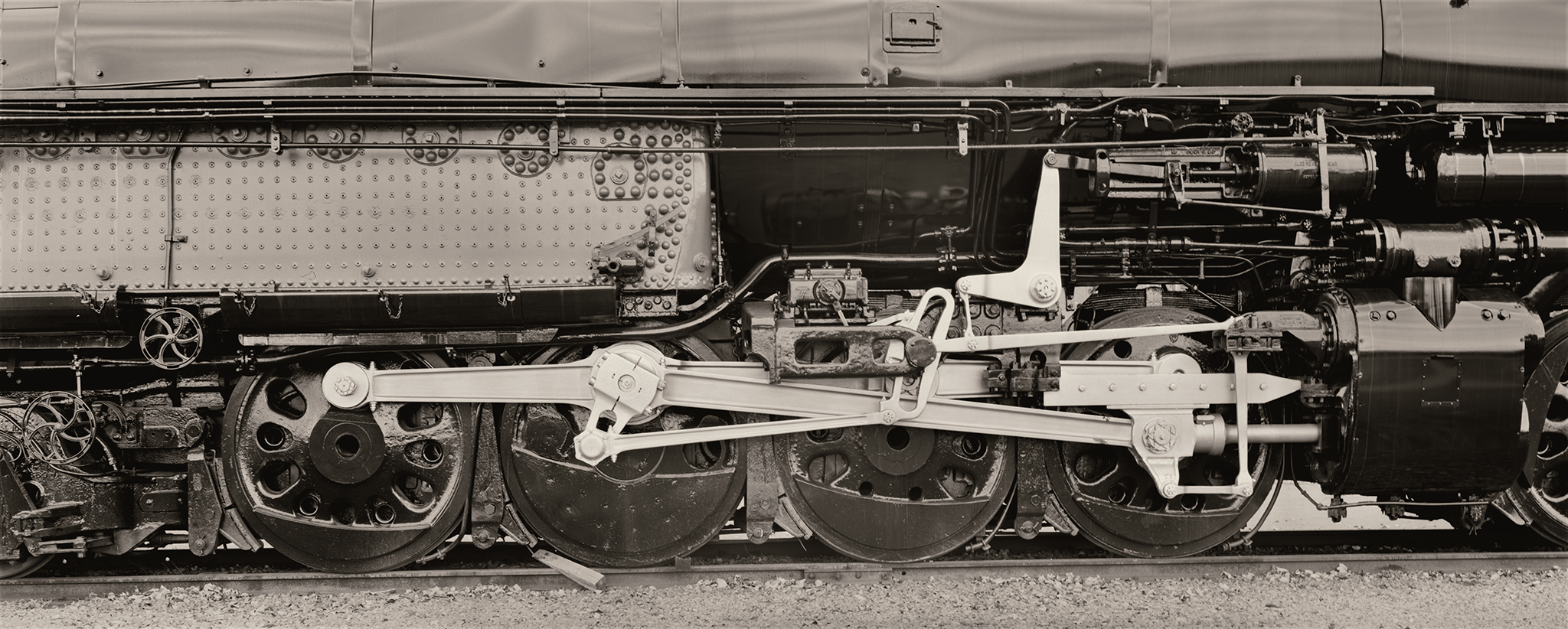
The Wanamaker Kempton & Southern, Inc. is a tourist railroad that runs steam and diesel locomotive powered train rides around the Berks County countryside. Train rides originate in the small village of Kempton, PA. In addition to regular 40 minute train rides, they also offer special themed train excursions including a murder mystery ride, Harvest Moon rides, Halloween Rides, Santa Rides, etc.
0-6-0 steam locomotive #65, a 1930 Porter locomotive. Engine #65 was acquired from the Safe Harbor Water and Power Company of Columbia, Pennsylvania in 1972. Engine #65 is the last piece of equipment to have arrived at the WK&S by rail. Engine #65 is the locomotive you’ll most likely see in action when you visit the WK&S.
For more information on the WK&S Railroad including ride schedules, visit their web site at www.kemptontrain.com/. Another great source of information and photos dedicated to the WK&S railroad is found here.
I shot this with my D200 and converted the RAW file to black and white with NIK Software’s Silver-FX Pro then blended two free textures provided by the following texture contributors (thanks folks !) to give this an old fashioned, grainy look.
Textures used:
Of corpse not (Skeletal Mess)
Golden Dreams (Telzey)
Ways to bookmark and share this post:
by Gregg Obst on June 13, 2009
in Photos
I made my way back down to the Edwin B. Forsythe National Wildlife Refuge in Oceanville, NJ on 6-13-2009 to observe and photograph all the many different kinds of birds and other creatures that reside there. On this trip, I wanted to try and concentrate on some new techniques and ways I thought I could get some better shots of the birds. I also wanted to spend some more time with the Ospreys there since the chicks were now visibile in the nests.

Osprey flies overhead.

I spotted these Thistle plants on the right side of the road just after the first left turn on the eight mile wildlife drive at the Edwin B. Forsythe National Wildlife Refuge in Oceanville, NJ during my 6-13-2009 trip. I forgot to bring the 70-200mm that lens I had planned to use for macro shots with the Canon 500D closeup filter so instead I just took this shot with my Sigma 50-500mm while sitting in the car shooting across through the passenger side window. Have I mentioned the 50-500mm can be a real S.O.B. to hand hold ? Must remember to review my checklist next time to make sure I have not forgotten any important lenses before I leave.

Two Black Skimmers attack the surface of the water at the Edwin B. Forsythe National Wildlife Refuge on 6-13-2009. They are a blast to watch.
When they “skim” they lower the lower half of their long bill into the water surface and fly along at a fast pace hoping to scoop up small fish. It’s amazing to watch how nature has equipped and adapted each of the different bird species at the refuge to use whatever they have in order to catch fish and survive. These guys attack the water like a fighter jet coming in and strafing it’s target. For more information on Black Skimmers visit the Cornelll Lab Of Ornithology.

Last weekend I didn’t see any chicks in the nest. Today there was one young chick and an older one that, just estimating, is probably about a week or two older than its sibling. This photo shows the older of the two with the Mom. The younger one is quite a bit smaller and stayed low in the nest except for when the Mother was doling out fish that the Father Osprey brought to the nest. I noticed that when she fed the two chicks, she would feed the smallest one first then the older one, with bites for herself in between. For more information on Osprey, visit the Cornell Lab Of Ornithology.

Two Common Terns fight over a fish. Can’t we all get along ? From my Saturday 6-13-2009 trip down to the Edwin B. Forsythe National Wildlife Refuge in Oceanville, NJ. The Tern on the left, having the advantage of being able to dig his feet into the wood for leverage, won this fight. For more information on Common Terns visit the Cornelll Lab Of Ornithology.

Snowy Egret slowly steps through the marsh to get a closer look at some fish he has spotted. For more information on Snowy Egrets, visit the Cornelll Lab Of Ornithology.

This Common Tern must have hovered directly over me for several minutes, affording me every possible angle I wanted. I tried to get him back lit with the sun to see if I could illuminate the tail feathers and this is the closest of those shots.
For more information on the Edwin B. Forsythe National Wildlife Refuge, visit their web site at www.fws.gov/northeast/forsythe/.
Ways to bookmark and share this post:
by Gregg Obst on June 7, 2009
in Photos
I spent a second day at the Edwin B. Forsythe National Wildlife Refuge in Oceanville, NJ observing and photographing all the many different kinds of birds and other creatures that reside there. I wanted to go back on Sunday to work on some techniques that after reviewing Saturday’s photos, I felt needed to be worked on. These are some shots from my Sunday trip.

I decided to take a second lap around the 8 mile wildlife drive loop because the light was just perfect by then. The very first thing I saw when I rounded the first turn and headed down the first part of the drive was this Black-crowned Night Heron sitting in one of the pools on the left. It wasn’t moving at all. He just stood there and posed for me. For more information on Black-Crowned Night Hersons visit the Cornelll Lab Of Ornithology.

On my second lap of the 8 mile wildlife drive loop, the sun was in the late afternoon magic hour and the light was golden and perfect. I pulled up along side this Snowy Egret in one of the inner fresh water pools near the end of the first leg of the 8 mile loop. I watched him watching the fish. We both waited. And waited. I had the Arca Swiss plate attached to the lenses tripod collar resting on my car window opening like a improvised tripod and we waited some more. Finally he lunged for his prize and came up with a tasty fish about four inches long. He quickly gulped it down and continued on fishing. For more information on Snowy Egrets, visit the Cornelll Lab Of Ornithology.
Male Osprey returns to the nest with additional nesting material comprised of grass to help soften the nest for the female and her Osprey Chicks. For more information on Osprey, visit the Cornell Lab Of Ornithology.

saw several of these Diamondback terrapins crossing over the dike that forms the barrier between the fresh water pools and the brackish salt water marshes at Edwin B. Forsythe National Wildlife Refuge on Sunday 6-7-2009. They cross over the dike during June to find suitable nesting grounds for their eggs. They eat mollusks, fiddler crabs and occasionally small fish.

Common Tern hovers over an area where fresh water is allowed to flow through the dike out into the brackish salt water marsh. Fish are often carried through this flow of water and the Terns hover over the area waiting for sight of a fish and when then see one, they dive violently downward into the water to grab their prey. For more information on Common Terns visit the Cornelll Lab Of Ornithology.

A Great Egret flies across my path, illuminated by the late afternoon sun.

Earlier in the day, I had overheard a conversation that a woman was having with another photographer friend of hers and she mentioned that she had just seen a Stilt on the opening leg of the 8 mile wildlife drive loop and she described to him where she saw the bird. I decided that on my second lap on the loop I would try and find this bird since I had never seen one in the wild before.
Sure enough, this bird was amongst some Mallards that were foraging in the shallow fresh water pool on the left side of the drive not far from where I spotted the Black-crowned Night Heron. For more information on Black-necked Stilts visit the Cornelll Lab Of Ornithology.
For more information on the Edwin B. Forsythe National Wildlife Refuge, visit their web site at www.fws.gov/northeast/forsythe/.
Ways to bookmark and share this post:
by Gregg Obst on June 6, 2009
in Photos
I spent the day at the Edwin B. Forsythe National Wildlife Refuge in Oceanville, NJ observing and photographing all the many different kinds of birds and other creatures that reside there. These are some shots from this day.

Great Egret. He stood there preening this way and that way, never really seaming to be happy and starting over again. He did cast a nice reflection though.

Great Blue Heron flies across one of the brackish salt water marshes.

I was watching this Great Egret for about an hour. The Egret was working the brackish channel looking for fish when this other Egret got, what the first Egret considered, “too close to his turf” and that’s when this little chase ensued.

Great Blue Heron struts his stuff after landing on the far shore of the marsh.

Another Great Blue Heron poses for me in the late day sun. He eventually stoped posing and caught some fish.
For more information on the Edwin B. Forsythe National Wildlife Refuge, visit their web site at www.fws.gov/northeast/forsythe/.
Ways to bookmark and share this post:
by Gregg Obst on June 6, 2009
in Photos

This is the first set of waterfalls you encounter after entering the trail on the Way to Dingman’s Falls in the Delaware Water Gap National Recreation Area in Pike County Pennsylvania. The falls are eighty feet tall. I shot this back on 5-3-2009 in the rain that never seemed to end that weekend. Unfortunately there are a few rain drops on the lens for this shot.
For more information on the Dingman Falls area visit their web site here
Ways to bookmark and share this post:
by Gregg Obst on June 5, 2009
in Photos

…If you are missing a Koi, be forewarned that your Koi is not coming home for dinner tonight because it IS dinner tonight for these Ospreys.

An Osprey delivers a fresh branch to the nest to be weaved into the existing nest infrastructure. They do this from time to time to strengthen the nest and repair damage due to storms and general wear and tear. I shot these photos over the Manasquan Reservoir in Howell, NJ.
For more information on the Manasquan Resevoir, visit their web site at this web site.
For more information on Osprey, visit the Cornell Lab Of Ornithology.
Ways to bookmark and share this post:
by Gregg Obst on June 4, 2009
in Photos

The United States Memorial Arch, located at the intersection of Outerline Drive and Gulph Road, was erected to commemorate the arrival of General George Washington and his Continental Army into Valley Forge.

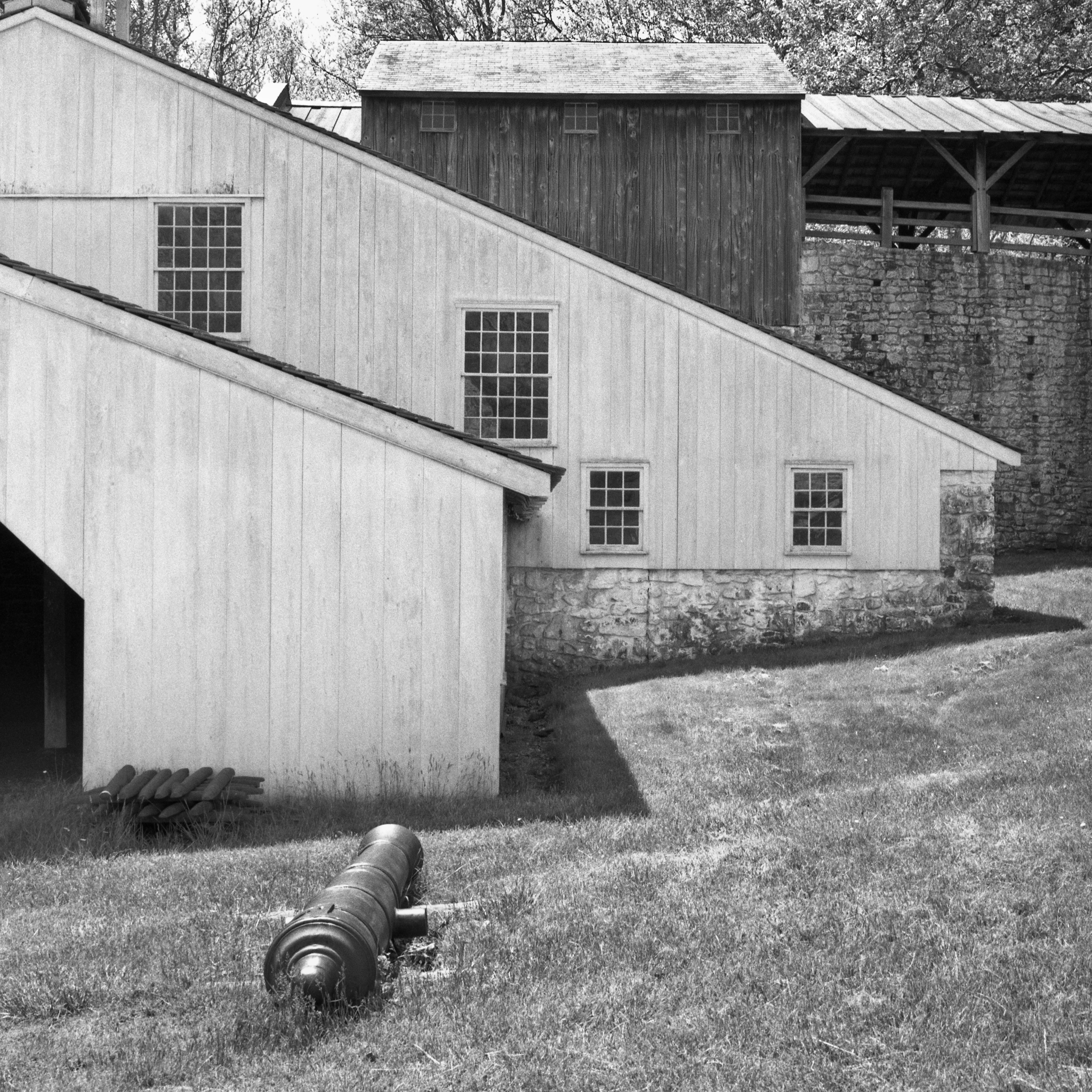
Revolutionary war era Canon pointed over the hill where General Peter Muhlenberg’s Brigade anchored the outer line of defense at the Valley Forge encampment from December 19, 1777 to June 19, 1778. Although no battle was ever fought between Colonial and British forces at Valley Forge, yet over 1,000 men lost their lives here due to severe winter conditions, dysentery, scurvy and a host of other ailments common to the times.
I shot this as five RAW bracketed frames then converted it to an HDR (High Dynamic Range) image using Photomatix Pro then layered and blended several free background textures from the following contributors in order to create an old fashioned feel to this.
Skeletal Mess (Painted Canvas 3)
Alicepopkorn (Magic Veil)

This small Revolutionary War era wood and mortar cabin is located near the National Memorial Arch

A reenactor playing the part of a Revolutionary War era infantry soldier near the cabins where General Peter Muhlenberg’s Brigade anchored the outer line of defense at the Valley Forge encampment from December 19, 1777 to June 19, 1778.
I’ve been listening to the unabridged audio book “1776″ by David McCullough who also narrates the book. It’s an absolutely riveting account of the armies, battles, personalities and monumental effort that went into the birth of our nation and I can’t recommend it highly enough for those of you interested in American history.
It was the first day on the job for this soldier reenactor and he really knew the part and had obviously done a ton of research on the lifestyle and day to day tasks of a soldier from this encampment. The reenactors interact with the crowd and really bring history alive at Valley Forge.
shot this as a single RAW frame, converted it to B & W using NIK Software’s Silver-FX Pro and then applied a texture containing a weathered copy of the Declaration of Independence.
For more information on visiting Valley Forge National Historical Park, check out their web site.
Ways to bookmark and share this post:
by Gregg Obst on June 1, 2009
in Photos

32 foot diameter water wheel on grounds of the Hopewell Furnace National Historic Site located in Elverson, PA. Iron production at Hopewell Furnace required a blast of air to bring the heat of the furnace above 2800 degrees (Fahrenheit). The water wheel supplied the power for this air blast by pumping a pair of pistons inside two blowing tubs. Compressed air moved from the blowing tubs into a receiving box between the tubs, and then through a long pipe to enter the furnace through the tuyere, a cone-shaped nozzle attached to the end of the pipe. The water wheel at Hopewell Furnace has a long sorted history which you can read about on this page.
Shooting this wheel posed some challenges since there was very bright sun entering the wheel house from both the bottom left and the top right while the wheel itself was very dark and in the shadows. The wheel was also in constant motion which ruled out traditional multi-frame bracketed HDR photography. I also had limited angles to shoot this from because of the fence in the foreground. I ended up shooting it as a single RAW image, used Photomatix Pro to convert it to pseudo-hdr to bring out the detail in the shadows on the wheel and even out some of the blown out highlights from the sun entering the wheel house then applied the Topaz Adjust plugin to bring out some more of the wood grain details on the supporting wood.


A wagon filled with coal under the overhang of a barn on the 848 acre grounds of the Hopewell Furnace National Historic Site located in Elverson, PA. Coal was used at one point in the furnace’s history to heat and melt the iron during the forging process. The wagons were drawn by horses kept on the furnace grounds. The Hopewell Furnace site features original buildings, barns, houses and furnaces from when this area was a working ironworks operation from 1771-1883. This was one of four historic Berks County locations I shot on Sunday 5-24-2009.
For more information on visiting the Hopewell Furnace National Historic Site visit their web site.
Ways to bookmark and share this post:
by Gregg Obst on May 26, 2009
in Photos

This is the blacksmith’s shop located on the grounds of the historic Daniel Boone Homestead in Exeter Township near Reading, PA. Boone was a famous pioneer, settler, soldier and explorer in the rough and tumble days of America’s childhood. Boone’s parents first settled the site in 1730 and Daniel was born here in 1734 and spent his first 16 years on this homestead before his family migrated to North Carolina. Squire Boone was a blacksmith by trade and would have had a building similar to this on his farm. This structure dates from 1769 and was moved to this site from nearby Amityville.

A nice, quiet meadow and a place to sit.

This is a tiny log and mortar cabin near the sawmill. I think it may have been used for storage of saw blades and other non-bulky items for the saw mill when it was in operation.

This German bank barn is the type which the DeTurk family who later owned the homestead property probably erected in the late eighteenth century. Portions of this barn are original. The lower level was a stable for animals, with the attached shed to the left used for wagon and implement storage. They keep a couple of horses and sheep today in the lower level for visitors to interact with.

The Boone House began as a one-room, one-story log house built by Daniel Boone’s Father in 1730, and included a cellar with a spring. Daniel was born in the log house in 1734. Sometime around the middle of the century, the large, stone two-story section of the present house that is fronted by the porch was built and attached to the log house. This larger section was constructed either by the Boones or by the second owner, William Maugridge. John DeTurk, a later owner, razed the log-house section in 1779 and replaced it with the two-story section of stone to the left of the porch (as you face the house). DeTurk retained the original log-house foundation and cellar.
The smaller dwelling to the right is a smokehouse, probably built by the DeTurk family in the late eighteenth century. It was used to smoke pork and other meats as a means of preservation, with the meat hung from the joists above and the fire built directly on the dirt floor below. Apple and hickory were the woods preferred for the fire. Above the loft was a meat-storage area.
For more information on visiting the Daniel Boone Homestead visit their web site.
I shot this as five RAW bracketed frames then converted it to an HDR (High Dynamic Range) image using Photomatix Pro. There were no lights inside the blacksmith’s shop and there was a fence baring entrance so I had to shoot into complete backlighting since the sun was coming through the back window. This is where HDR techniques really pay off.
This was one of four historic Berks County locations I shot on Sunday 5-24-2009.
Ways to bookmark and share this post: